
We recently ticked off yet another place from our bucket list. A place which we would have visited much earlier had COVID not hit. In 2021, we had made all the necessary arrangements to visit this destination, but that’s when the world was struck with the deadly second wave, wreaking havoc. It was a phase that saw us catch the bug as well.
Fast forward to five years later, we finally managed to reach the mysterious state of NAGALAND. We had always been fascinated with the state as it was home to Dzukou Valley. We are not trekking people, but from various blog posts and YouTube videos we had learnt that it was a fairly easy trek, which even amateurs could complete.
Let me tell you first hand, IT WAS NOT!
That’s a story for another day.
Before Nagaland, we had completed two states in the North-east: Sikkim in 2020 and Meghalaya in 2021. The North Eastern part of India hits you different. The sceneries, the friendly people, the clean air and a very chilled atmosphere gets you hooked to the region, making you want more.
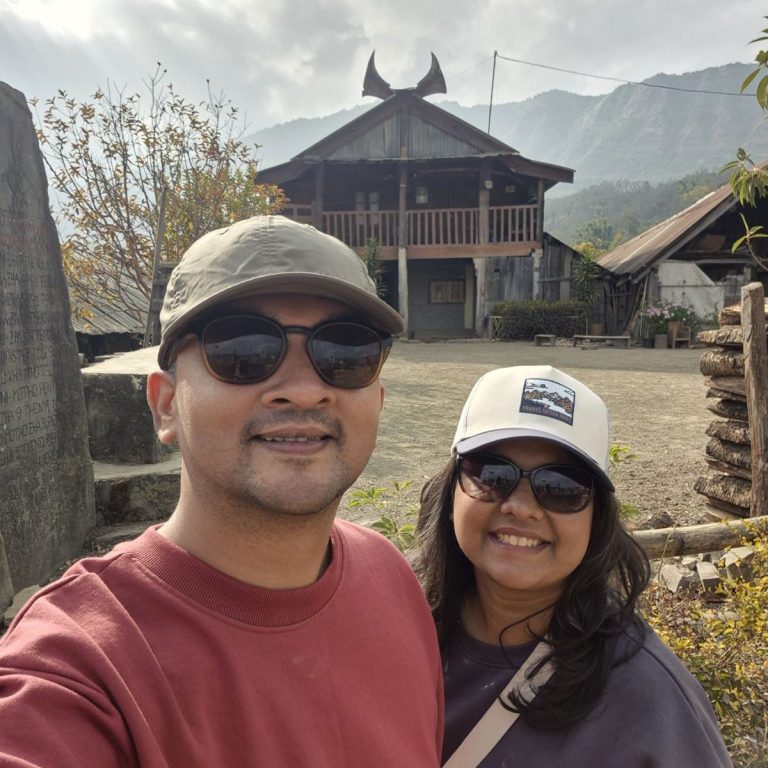
While Sikkim and Meghalaya were somewhat less challenging and easy to crack, Nagaland was anything but.
While the Dzukou Valley is slowly gaining popularity around the country, Nagaland is so much more than that. Six days we spent were not even remotely enough, as there are several other regions that we did not even get a chance to touch.
Sneak Peek into Nagaland
Guwahati is the gateway to most states in the North East, including Nagaland. We flew from Bengaluru to Guwahati; from there, you can travel by road, train, or flight to Dimapur, the largest city in Nagaland. Dimapur has long been the “lonely” transport lifeline for the state. As the only part of Nagaland situated in the plains, it naturally became the hub for everything requiring a long, flat runway or heavy railway tracks.
A train ride from Guwahati to Dimapur takes just four to five hours and is one of the most underrated journeys in the Indian Railway network. The most convenient trains depart early in the day. As you leave the hustle and bustle of Guwahati in the morning mist, the tea gardens along the route look absolutely surreal.
Unfortunately, due to time constraints, we could not experience the train journey and instead took a flight from Guwahati to Dimapur. That decision, however, turned out to be excellent. When flying in from the west, you spend a long time looking at the flat, gray-green expanse of the Brahmaputra Valley in Assam.
As you approach Dimapur, the landscape literally begins to ripple. Dimapur may be a flat plain, but the views from the window seat provide a sneak peek of the rest of Nagaland as the Naga hills rise abruptly like a wall of dark green.
I vividly remember asking our guide about the hills we saw from the flight. He said it was the Patkai Range. As our flight entered its final approach, these hills seemed so close to the horizon it felt as though we were going to land in the mountains themselves. The Patkai Range act as a natural boundary between Myanmar and North Eastern states such as Nagaland, Mizoram, and Manipur.
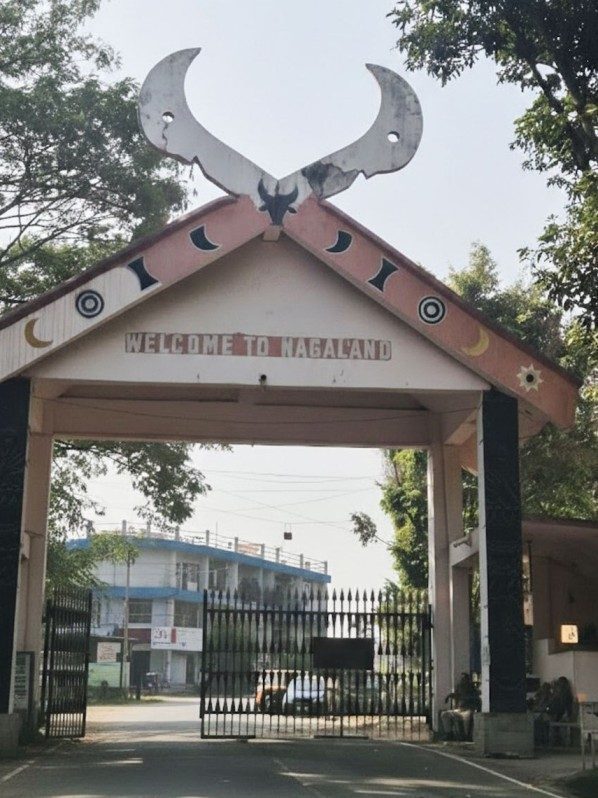
From our short trip to Nagaland, we established one thing for certain: the Nagas are passionate, creative, and big foodies. Their creativity even reflects in their Entry Gate (Arch). Every gate we spotted looked beautiful, featuring the typical horn-like Naga design at the top—and trust me, we spotted a lot of gates.
The cities comprise several tiny villages, and you know you are about to enter one when you see a massive gate with the name of the village written across it. One of our first memories of Nagaland was passing through the “Welcome to Nagaland” arch as we exited the airport.
Kohima: ‘Welcome to the Hills of Nagaland’
We saw another arch as we were leaving Dimapur that read, “Welcome to the Hills of Nagaland.” Soon after, the landscape changed, the temperature began to drop, and we knew we were closing in on Kohima. The capital of Nagaland is a stunning city perched right on top of a hill.
Kohima is, without a doubt, one of the cleanest cities in the state. All those videos you may have seen about the lack of honking and the disciplined drivers in the North East are absolutely true. Even in heavy traffic, you barely hear a honk or see anyone overtaking in a rash manner.
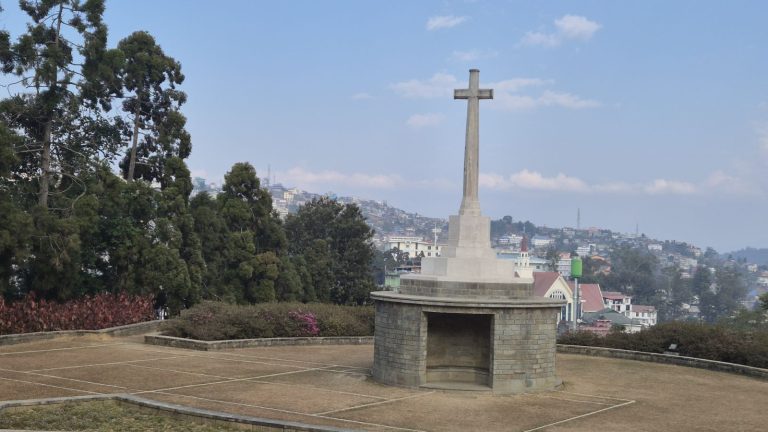
There are a few must-visit places in and around Kohima. Start with the Kohima War Cemetery, built on the former tennis court of the Deputy Commissioner’s bungalow. This was the site of some of the fiercest fighting during the Battle of Kohima in World War II.
When exploring the local markets, don’t be surprised if typical tourist souvenirs are hard to find. We even struggled to find fridge magnets! In some instances, shopkeepers weren’t even sure what a fridge magnet was, which highlights how much of a “hidden gem” Nagaland still is. However, you can find a few souvenirs at Made in Nagaland (an NGO-run store) or at the airport.
If you’re looking for winter wear at a reasonable price, the local Naga Bazar in Kohima is the place to be. Adventurous eaters should definitely try the street food there, while coffee lovers can head straight to Ete Coffee Roasters for a local brew. We also stumbled upon a local art gallery where we bought hand-painted postcards and even had the chance to meet the artist.

You cannot miss Kisama Heritage Village, the permanent site of the Hornbill Festival and a year-round open-air museum. It features traditional dormitories (Morungs) for every major tribe, showcasing their unique wood carvings and layouts. It’s a delight for photography and history enthusiasts.
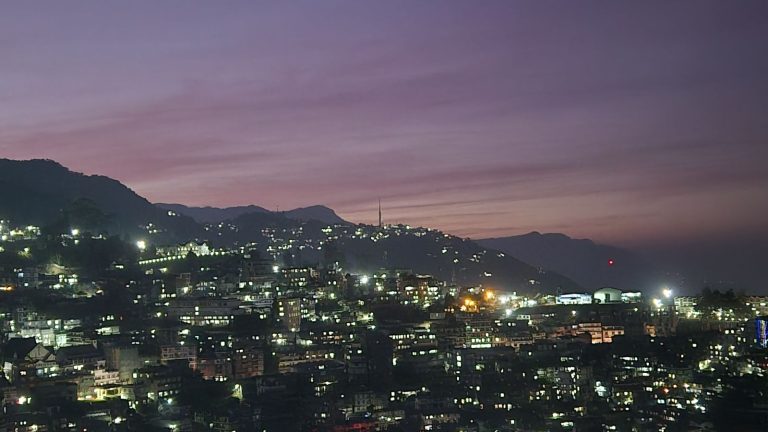
End your day at the Cathedral of Kohima on Aradura Hill. This striking structure is known for its blend of traditional Naga design and modern architecture. Even if history or architecture isn’t your main interest, go for the sunset. The colours we saw there are still etched in our minds.
Pro Tip: We recommend you stay a bit outside of Kohima to avoid cramped places. We stayed in a homestay in Kigwema, which is not too far from the capital city. Moreover, it is also a gateway to go to Dzukou Valley, our main purpose of the visit.
Challenging drive to Kapamodzü
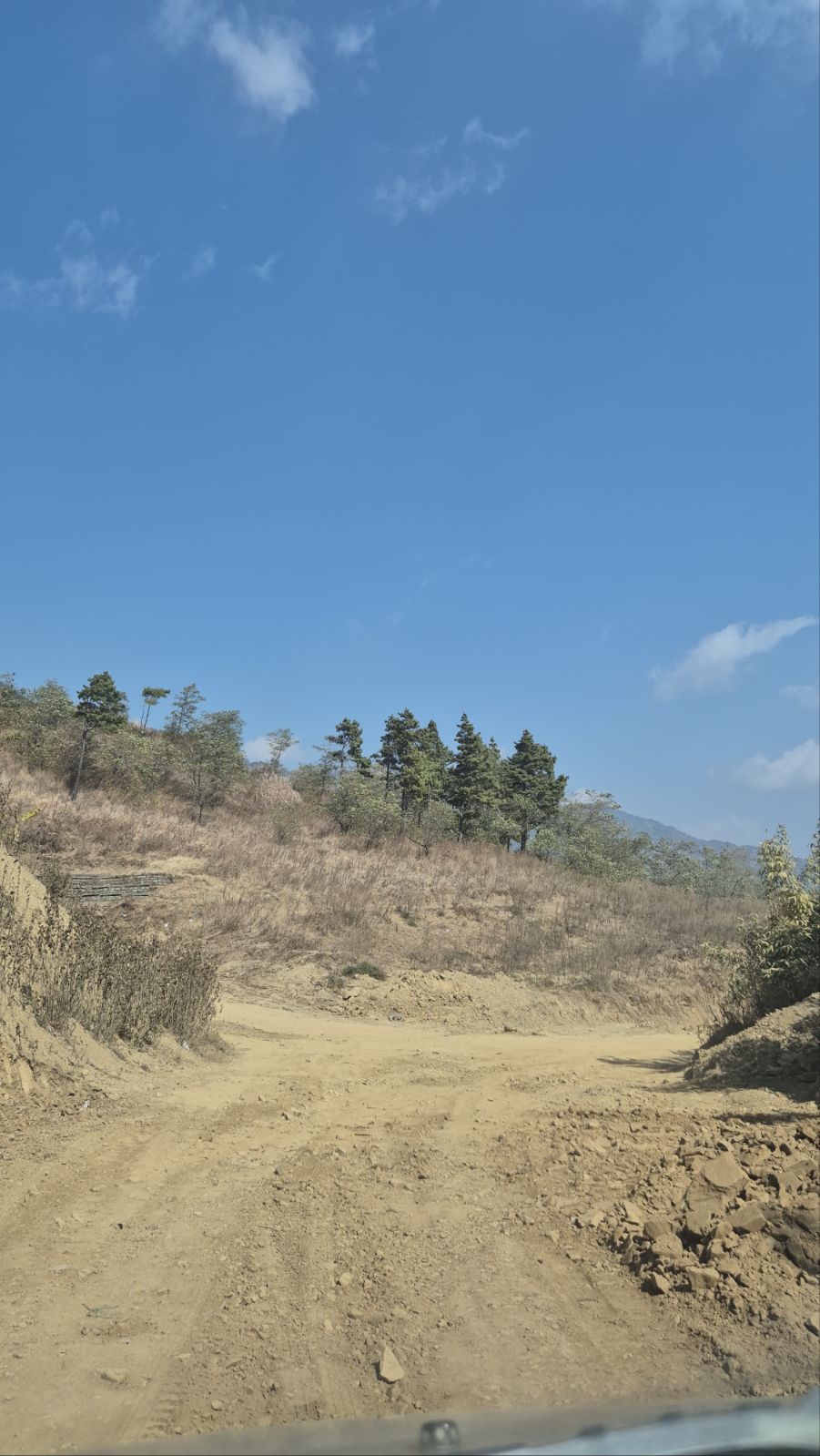
One of the most challenging drives of the entire trip, the drive to Kapamodzü was a memorable one, yet one you want to forget. For starters, there are no roads. That’s very common in Nagaland, as most of these areas are prone to landslides.
The image below will tell you I am not exaggerating.
After a drive that felt like an eternity, we reached Kapamodzü Peak, where we were greeted by some of the most stunning views imaginable. Standing at 2,620 meters, it is the fourth-highest peak in the state and is famously known as the highest table-top mountain in Nagaland.
Being at the summit literally feels like standing on the roof of the world; it offers a 360-degree panoramic view where the horizon seems to stretch forever. On a clear day, you can spot the mighty Mount Saramati to the east and the twin peaks of Japfü to the south, with the hills of Manipur shimmering in the distance.
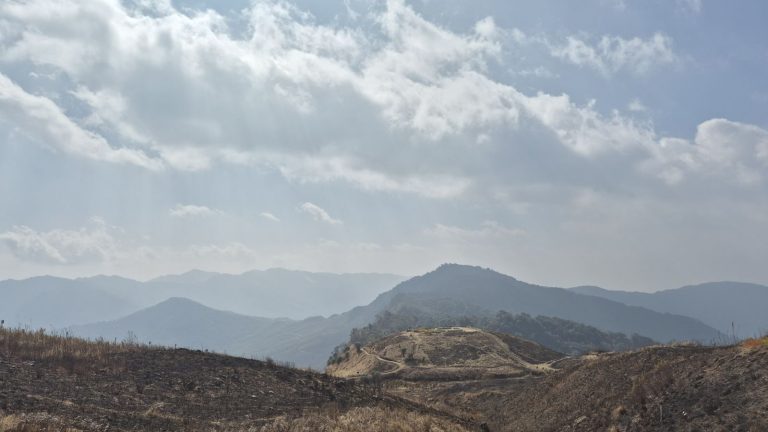
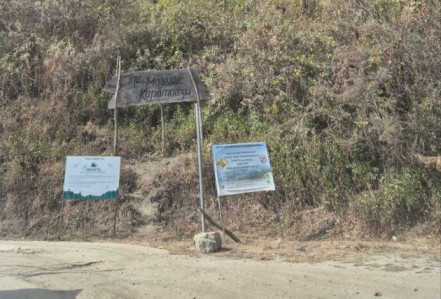
When you are at such a height, the best views don’t always come easily — some require a bit of a hike. The trail is known to be even more beautiful around October when the wild cosmos are in full bloom, painting the slopes in shades of pink and white. As you draw closer to the base of the peak, wooden signs with “Majestic Kapamodzü” begin to appear. Once you reach the top, you truly realise why the locals gave it that name.
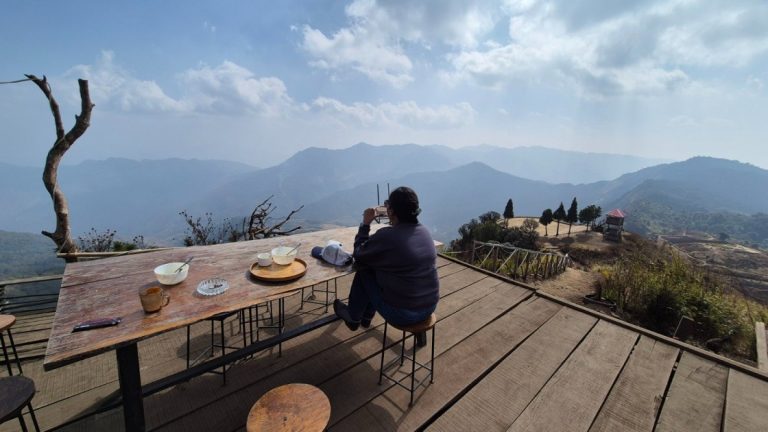
Of course, when you are relaxing on a mountain, having “Pahado wali Maggi” is a must. There is a sole café in the entire region, though it takes quite a few steps to reach it. We were the only ones there, enjoying our Maggi with that gorgeous view all to ourselves—a true core memory. For those looking for more adventure, the café provides tents for anyone wanting to stay overnight and wake up to a magical sunrise atop Kapamodzü Peak.
Pfutsero: The Coldest City in Nagaland
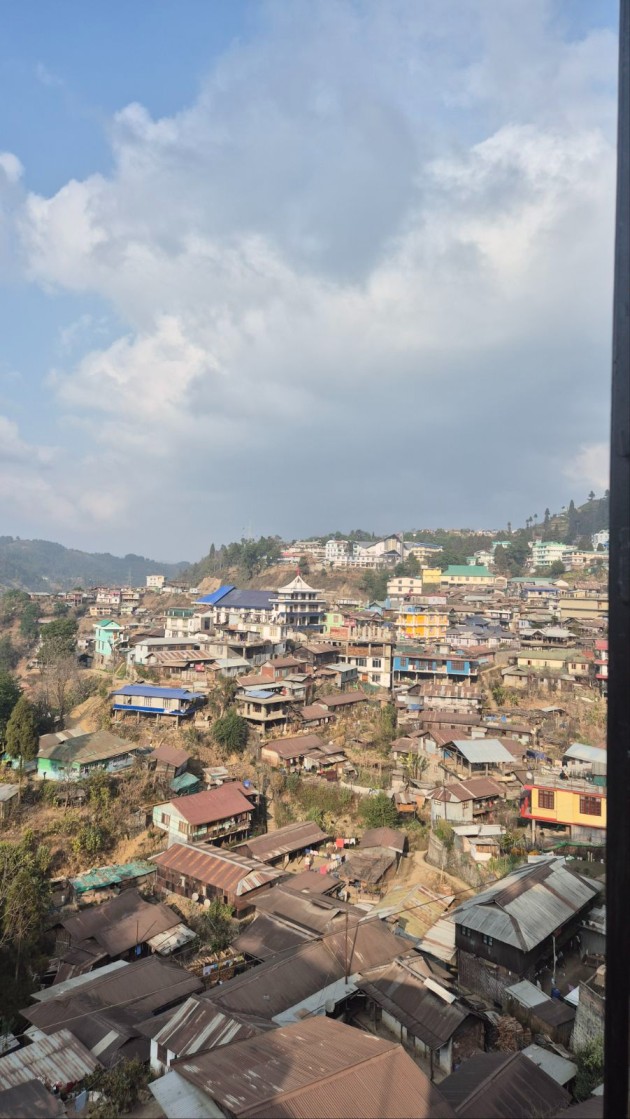
Kapamodzü was just a brief stop before we finally reached our destination: Pfutsero, the coldest inhabited place in Nagaland. It was our home for a day, and we found ourselves wishing we could have stayed another night. It is a quaint, quiet town, and since we both love winter, the weather was absolutely perfect.
If you are there during the day, make sure to explore the local market, especially the bakeries and the small cafés. We visited Coffee & Co, a cozy spot that even had board games. We spent a wonderful afternoon playing Uno Flip over coffee, surrounded by superb views.
Our hotel in Pfutsero was home to a dog named Charlie. Just like any true mountain “doggo,” this good boy insisted on leading the way as we stepped out for our evening walk.
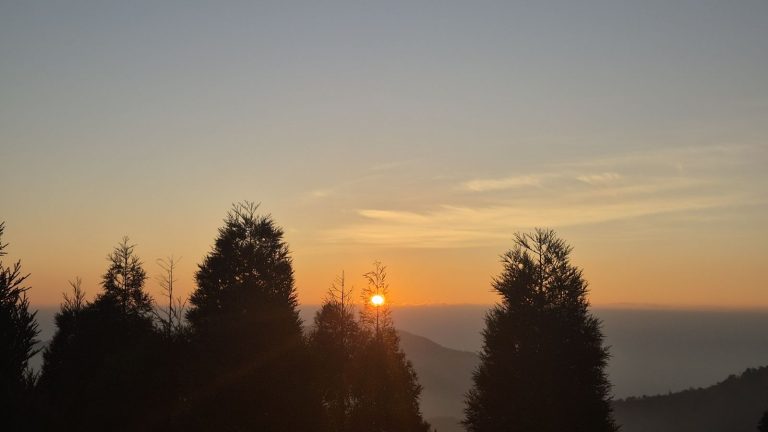
The main reason for visiting Pfutsero—a town of around 10,000 people—was to catch the sunrise at Glory Peak, which was roughly 20 minutes from where we stayed. The drive was smooth, and the sight from the summit was gorgeous. Be sure to get there by 5:00 AM for the best views, and keep your fingers crossed for clear weather!
Khonoma: Where Every Stone Tells a Story
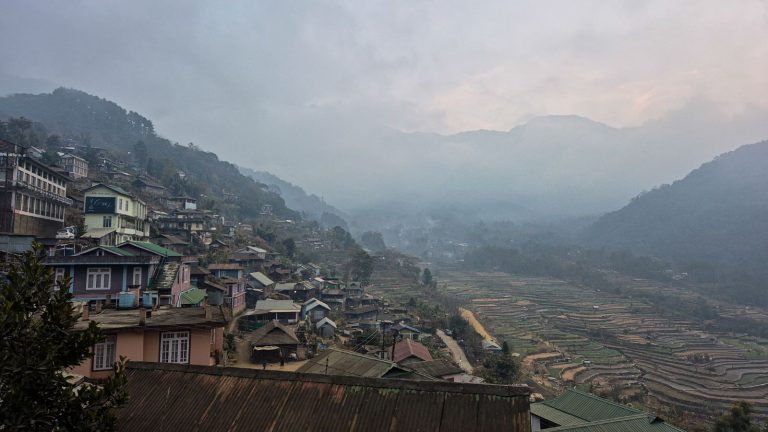
Khonoma Village, a historic village in Nagaland, dating back to the 1850s, when the locals showed resistance against the British – among the first state in the country to do so. However, Khonoma is now a peaceful and green village which reeks of modernity but at the same time remains connected to its roots. A walking tour there will fill you with facts that would astonish you.
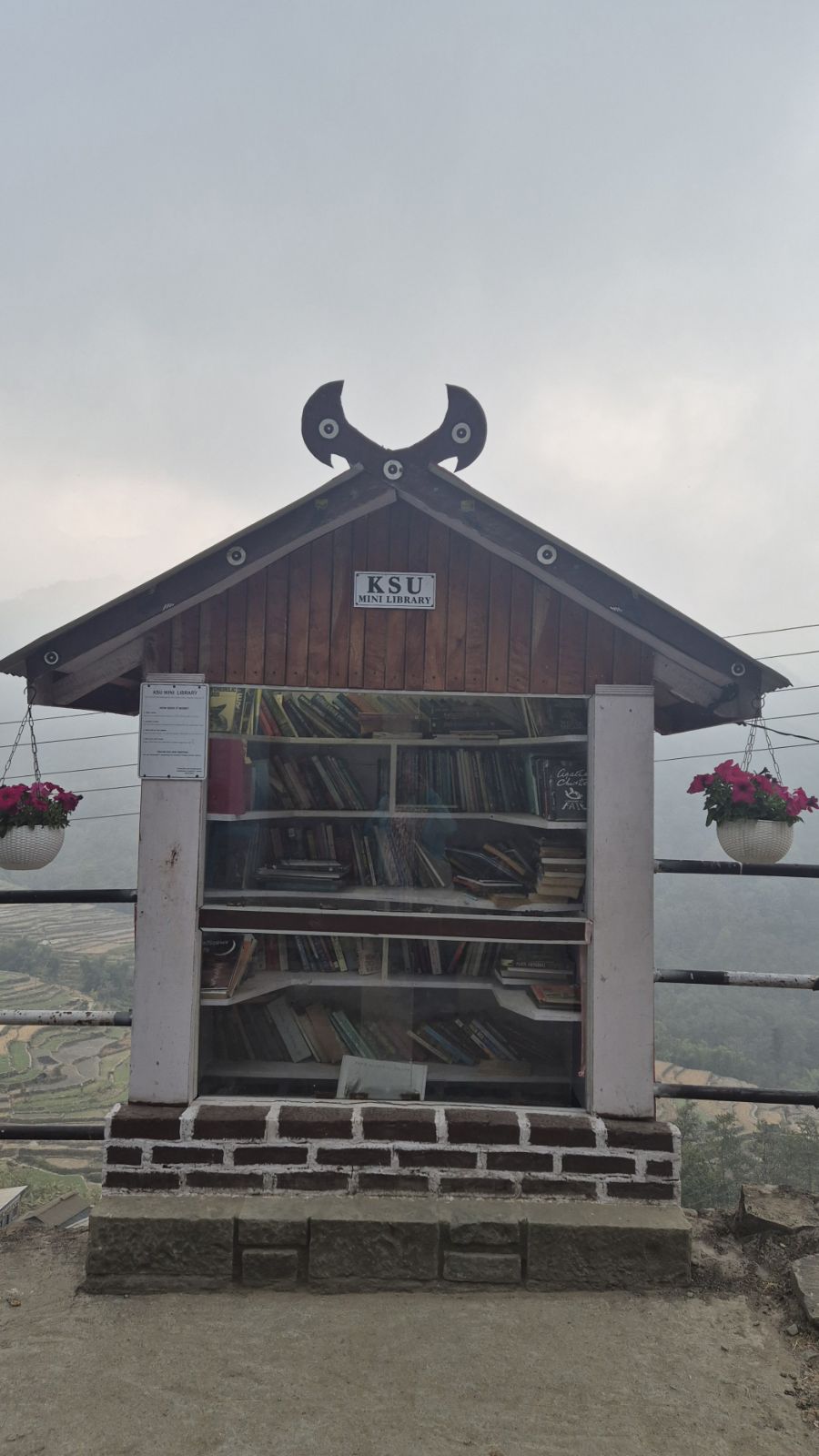
As a final tip: at the end of your tour, you’ll find a small community library. If you can, leave a book behind for the local children to enjoy; it’s a wonderful way to give back to this inspiring community.
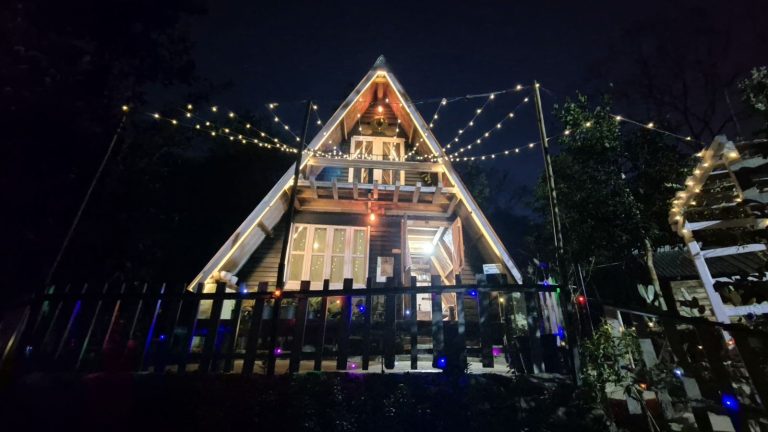
And yes, not too far away from Khonoma, there is this cabin, where you can spend a night or two. Look how cozy it is!
The Dzukou Valley Trek
This is undoubtedly one of the most challenging treks in the region, but the views at the end of it make every step worth it. Unfortunately, because the recent fires had engulfed the main valley, we had to take an alternative route. Even this path had been affected by wildfires not too long ago; as a result, we saw large stretches of charred, blackened landscape along the way.
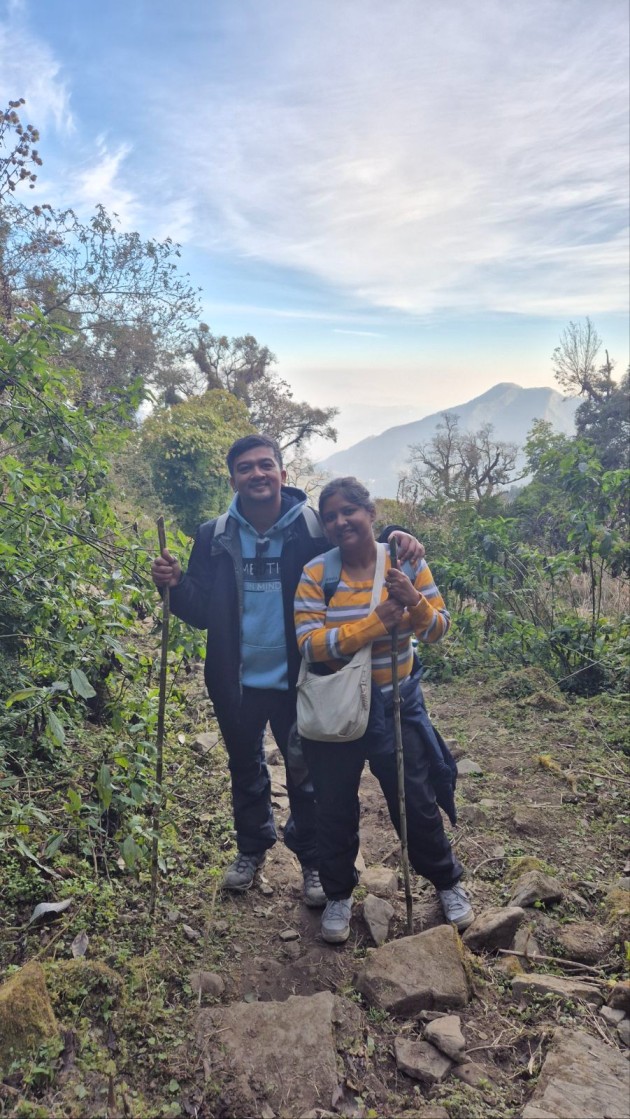
Despite the “black spots” throughout, the valley is steadily recovering and it won’t be long before Dzukou is back to its iconic, lush green self.
More on our experience in a different post. Coming soon!


Anu
March 26, 2026 — 7:49 am
Thank you for taking us through this amazing land. It is such a vivid description of the place away from the madding crowd.A great guide for people interested to explore the hidden gem